


“UEM members’ prayers and visions are for a more just, equitable society without all forms of hatred and discrimination”, said Bishop Dr Abednego Keshomshahara, Moderator of the United Evangelical Mission (UEM) and head of the ELCT/NWD*.
This October, he visited the two Rwandan UEM member churches. With EPR*, he participated in a conference on mission and colonialism, afterwords visiting projects of EAR* on social change and justice. The Moderator chairs the General Assembly and the Council, the two highest decisionmaking bodies of the communion of churches.
Colonialism, Mission and Responsibility
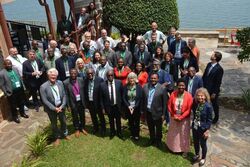
The title of the conference was "Colonialism, Mission, and Responsibilities for the Future - The example of the ‘Great Lakes’ region in Central Africa”. In Karongi, where EPR is running Bethany Hotel, the participants reviewed colonialism and Christian mission in its historic entanglements. “The 39 UEM members are committed to worldwide peace, economic fairness and sustainable development”, shared Bishop Keshomshahara.
The opening speeches were held by the Deputy CEO of the Rwanda Governing Board (RGB), the Mayor of Karongi, the Moderator of the World Council of Churches (WCC) Bishop Prof Dr Heinrich Bedford-Strohm, Bishop Dr Keshomshahara, Professors, Lecturers, and Co-workers serving various ecumenical and academic institutions in Europe, Africa and especially Rwanda.
On the one hand, colonial conquest and exploitation was founded upon a belief of white supremacy – and ideology that also drove many missionaries and is relevant until today, especially in development cooperation. On the other hand, encounters of faith often transformed both sides, creating space for more humble, mutual learning and shared humanity.
According to Christian Broadcasting Nexus, the EPR President Rev Dr Pascal Bataringaya emphasized healing as a goal of the gathering in Karongi: During lectures, seminars and roundtable discussions, church and academic representatives from African and European countries went back to the historic roots of injustice. Starting from there, they developed new perspectives for relationships between churches and people, shaped by companionship and respect.
Projects of learning for life
After the conference, Bishop Keshomshahara visited EAR* and its Dioceses of Shyogwe and Butare. Both Dioceses are operating a variety of projects supported by the UEM communion.
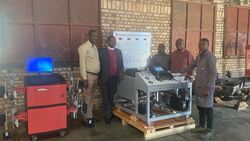
Bishop Louis Pasteur Kabayiza of the EAR Diocese of Shyogwe introduced him to projects in Gahogo, Gitarama, and Hanika, where young women and men are learning in Vocational Training Centers. Gitarama is focused on handicrafts like sewing, carpentry and others, while Hanika emphasizes information technology and car repairing.
Bishop Christophe Nshimyimana of the EAR Diocese of Butare took the UEM Moderator to Butare, Mbagabaga, and Mushirarungu. Here, the Diocese is conducting projects with UEM communion's support as well. On Sunday, Bishop Nshimyimana invited Keshomshahara to a worship service, marking the official opening of the new parish of Mushirarungu made of an estimated 1500 congregants.
Both Dioceses are still working on some of the new government regulations concerning hygiene and safety standards in religious places. In his sermon in Mushirarungu, Keshomshahara commented on the Gospel of John 3;16.
For more information about UEM’s projects in Rwanda, see our article on the role of Single Mothers in EPR and EAR.
*ELCT/NWD = Evangelical Lutheran Church of Tanzania, North Western Diocese
*EPR = Eglise Presbyterienne au Rwanda (Presbyterian Church of Rwanda)
*EAR = Eglise Anglicane au Rwanda (Anglican Church of Rwanda)



 spenden@vemission.org
 0202-89004-195